
 English
 русский
 Español
 عربى


Product Category
News Categories
Contact Us
Heavy Industrial Fan Failures in Extreme Environments: Prevention & Design
Content
If you have worked with heavy industrial fans for more than a few years, you know the feeling: a machine that ran smoothly last week is suddenly vibrating so badly that the floor shakes. By the time you stop the line, the damage is already eating into your budget. This article explains why heavy industrial fans fail in extreme environments and what can be done to keep them running year after year.
Extreme Environments Present a Different Challenge
A fan is designed for a set of conditions. When those conditions move beyond the design envelope—high heat, dust, corrosive gases, humidity, vibration—the whole system begins to compensate. Bearings run hotter, seals let in dirt, blades erode or build up deposits, and the motor follows a spiral of thermal stress. In my experience, fewer than half of premature failures are caused by bad manufacturing. Most are caused by mismatches between the fan specification and the real environment.
| Environmental stress | Common failure mode | Design response |
|---|---|---|
| High temperature & thermal cycling | Lubricant breakdown, insulation failure | High-temperature grease, class F/H insulation, heat shields |
| Dust and abrasive particles | Impeller erosion, bearing wear, imbalance | Hardened coatings, filter guards, wear-resistant impellers |
| Moisture and corrosive gases | Rust, pitting, shaft seal leakage | Stainless steel, epoxy coatings, IP55 or higher enclosures |
| Vibration and shock | Fatigue cracks, loose fasteners, resonance | Dynamic balancing, rigid mounts, dampers |
The Most Common Failure Points
Bearing Failure Under Heat and Load
Bearings are typically the first component to give up. High temperature thins the grease, accelerates oxidation, and changes internal clearances. Dust and moisture then do the rest. Once a bearing starts to break down, it produces vibration that quickly damages the shaft, seal and impeller. We have taken apart fans where the bearing cage disintegrated after only a few months because the specified grease was never intended for continuous 70 °C operation.
Corrosion, Erosion and Dirt Buildup
In chemical plants, paper mills and coastal installations, corrosive agents attack the impeller and housing. Unprotected steel can lose millimetres in weeks. Even "mild" dust can act like sandpaper when the fan runs at high speed. Dirt buildup on blade surfaces does not just reduce airflow; it creates imbalance, which then loads the bearings and motor. The fan may appear to be working, but efficiency drops silently and the mechanical load rises.
Motor and Electrical Stress
Heat is also the main enemy of the motor winding. A useful rule of thumb is that insulation life is halved for every 10 °C rise above its rated temperature. Add voltage fluctuations, frequent direct-on-line starts and moisture, and you have a recipe for shorted turns and premature trips. Many heavy industrial fans fail not because the motor is undersized, but because the thermal protection is poorly coordinated with the actual duty cycle.
Vibration, Resonance and Structural Fatigue
Fans are sometimes mounted on lightweight frames or roof structures that amplify vibration. When the fan's operating speed coincides with a natural frequency of the structure, resonance can double or triple the dynamic forces. Over time, that causes cracks in the housing, loose bolts, and in the worst cases, catastrophic failure of the impeller. Extreme temperatures make the problem worse by changing the stiffness of metal parts and the viscosity of lubricants.
Engineering Reliability Into the Design
The answer is not simply to buy a stronger fan. It is to build the fan for the environment. From material selection to control settings, every decision influences how long the fan survives.
Material Selection and Protective Coatings
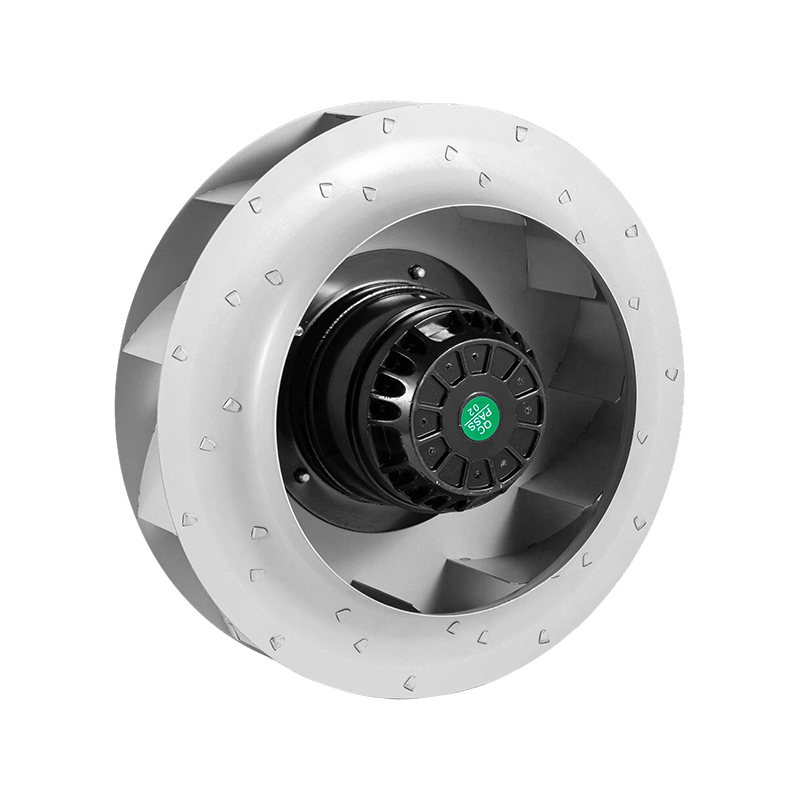
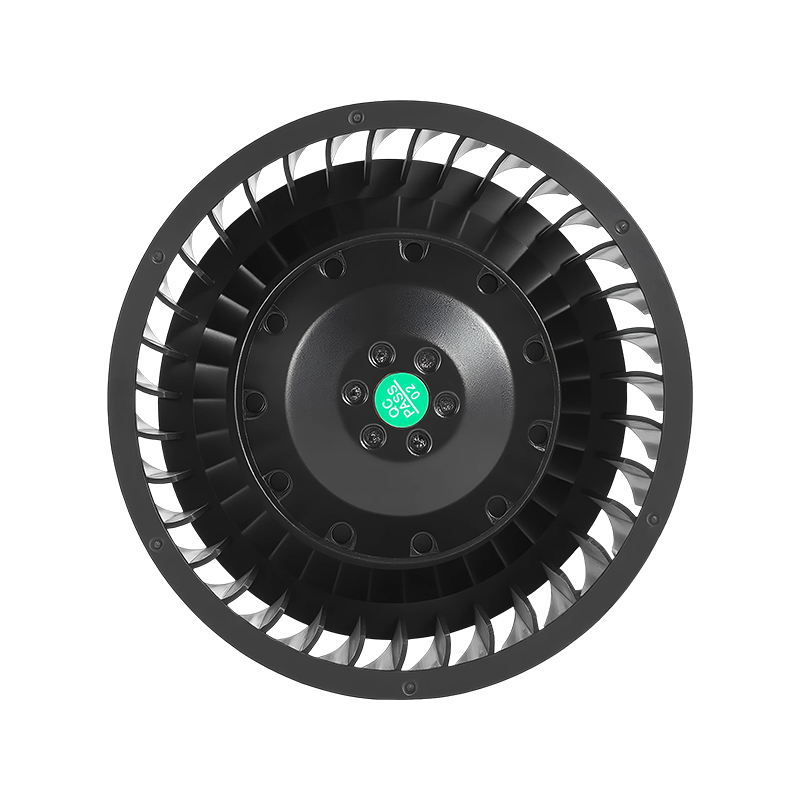
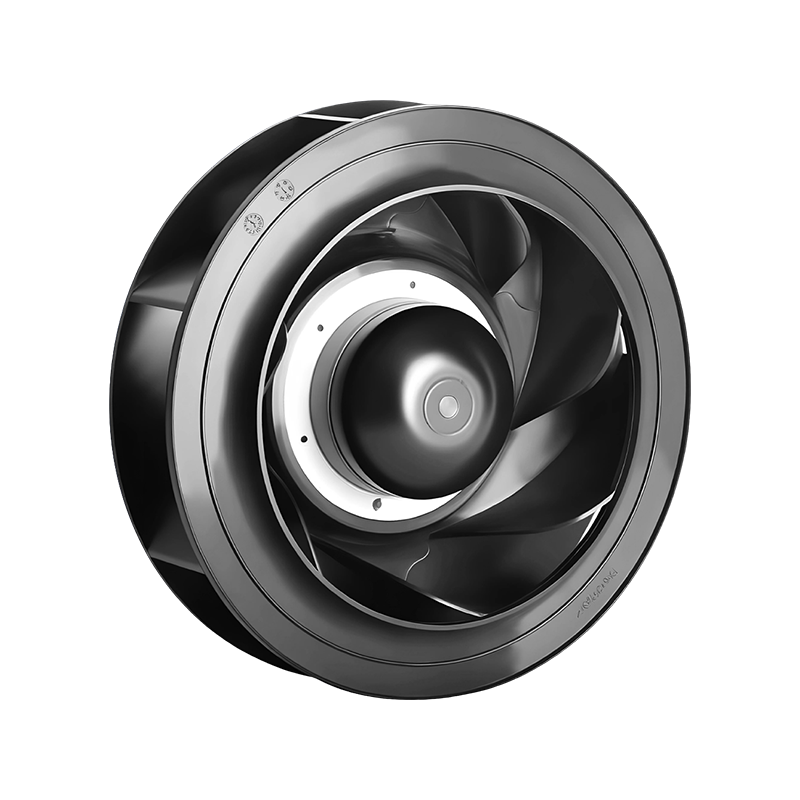
For corrosive or abrasive media, standard painted carbon steel is rarely enough. At Beron Motor, we work with galvanized steel, stainless steel and aluminium, and we use coatings matched to the expected chemistry. A durable metal backward-curved centrifugal fan, for example, can be specified with a reinforced epoxy coating for filtering systems in demanding industrial settings.
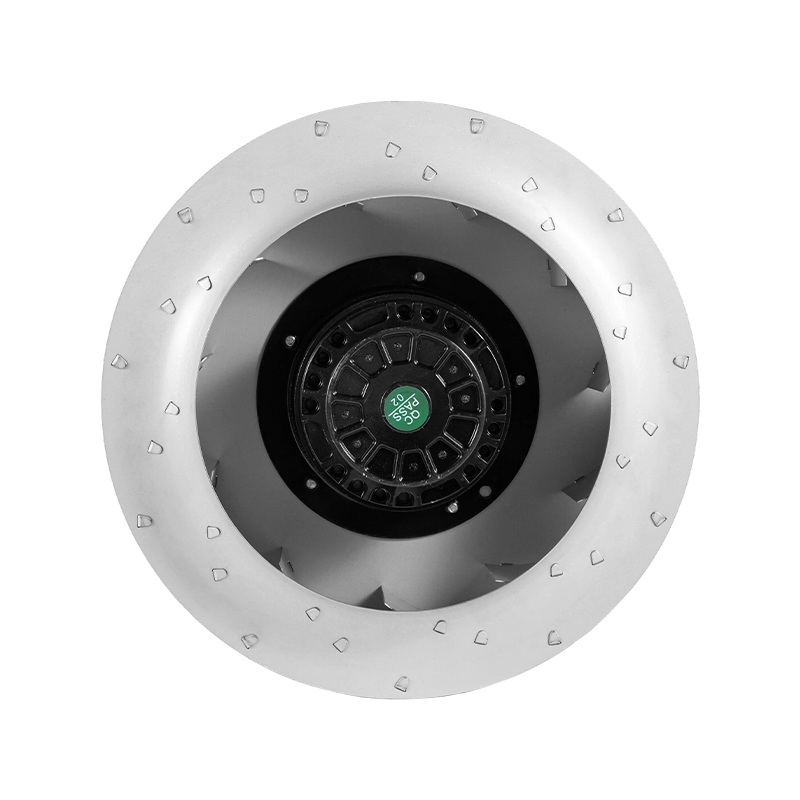 Durable AC Backward Centrifugal Fan for Demanding Air FiltrationThis corrosion-resistant metal fan suits industrial filtering and cleanroom systems. Its reinforced epoxy coating and robust construction answer the harsh-media concerns raised earlier.View Product →
Bearing and Lubrication Strategy
Bearing selection deserves more attention than it usually gets. We look at load, speed, temperature and relubrication access. External rotor motors can keep the bearings cooler because the rotor acts as a heat sink. For extreme hot spots, we discuss synthetic grease or oil mist lubrication. The goal is to maintain a good lubricant film at all times, even during long, continuous duty.
Motor Insulation and Protective Enclosures
Class F and Class H insulation are essential in hot environments. For dusty or wet areas, IP55 or higher enclosures prevent particles and moisture from reaching the winding. On DC and EC fans, we also add overvoltage and reverse polarity protection to guard against supply faults. If the unit will be exposed to direct rain or washdown, cable entries and drain holes have to be positioned correctly.
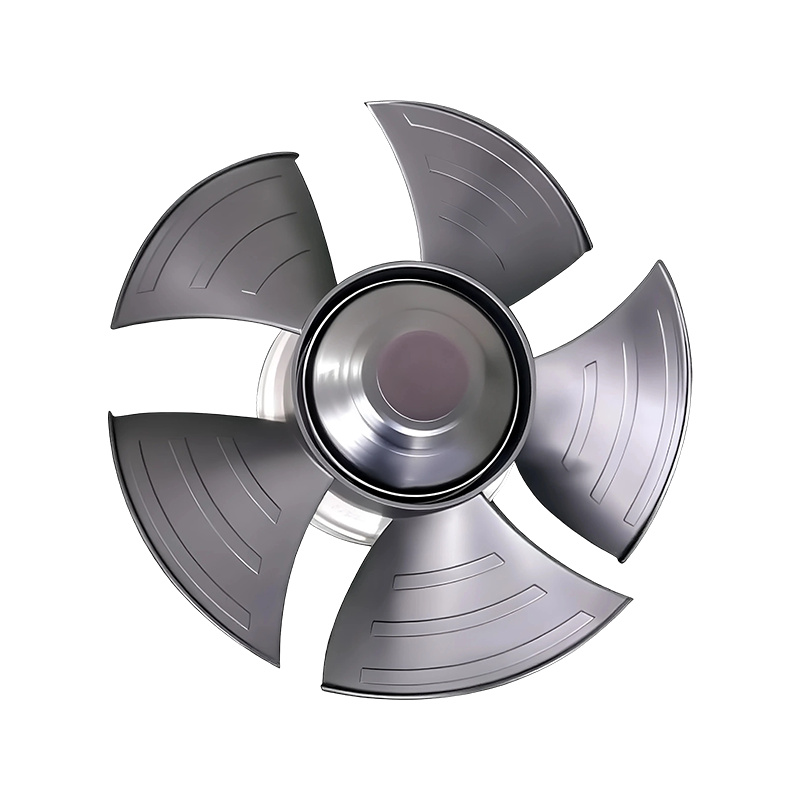
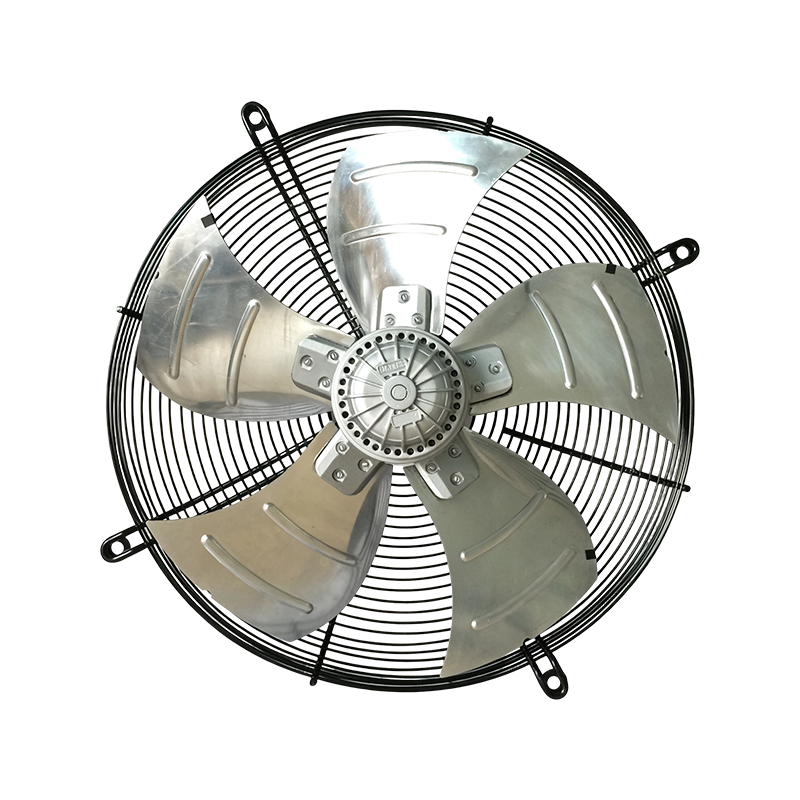
For heavy process areas, a simple, rugged design often wins. An 800 mm industrial AC axial fan with seven metal blades and a heavy-duty external rotor motor is one example of a machine that can survive hot, dusty air without complex electronics that might itself be damaged by the environment.
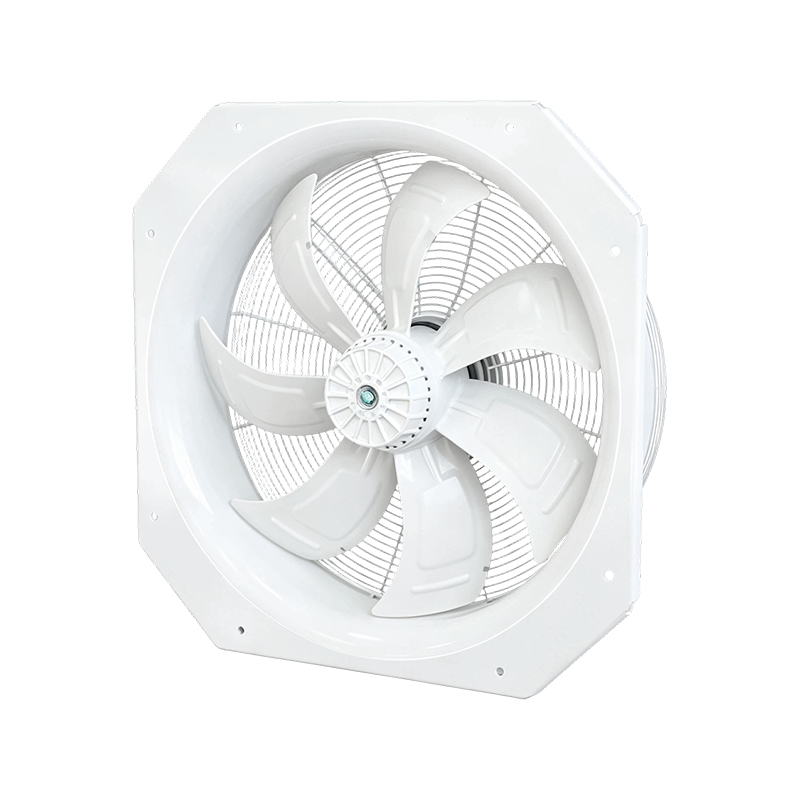 Rugged 800mm AC Axial Fan with Heavy-Duty Metal BladesBuilt for hot, dusty industrial air exchange, this seven-blade axial fan survives tough environments. Its balanced impeller and simple design align with the reliability focus above.View Product →
Aerodynamic and Structural Design
Blade curvature and thickness influence erosion. Backward-curved blades run more efficiently at higher pressures and are less likely to collect dust than forward-curved blades. At the factory, every impeller is dynamically balanced and, if necessary, oversped to verify structural integrity. This may not be visible on the data sheet, but it is what keeps the fan quiet in the first year and still quiet in the tenth.
Control and Protection: More Than Just Power
A well-designed fan still depends on how it is driven and monitored. Across our EC and DC ranges, stepless speed control and PWM let the fan follow demand instead of starting and stopping heavily. Soft starting reduces mechanical and electrical stress. Built-in temperature sensors or external VFDs can trip the fan before damage occurs.
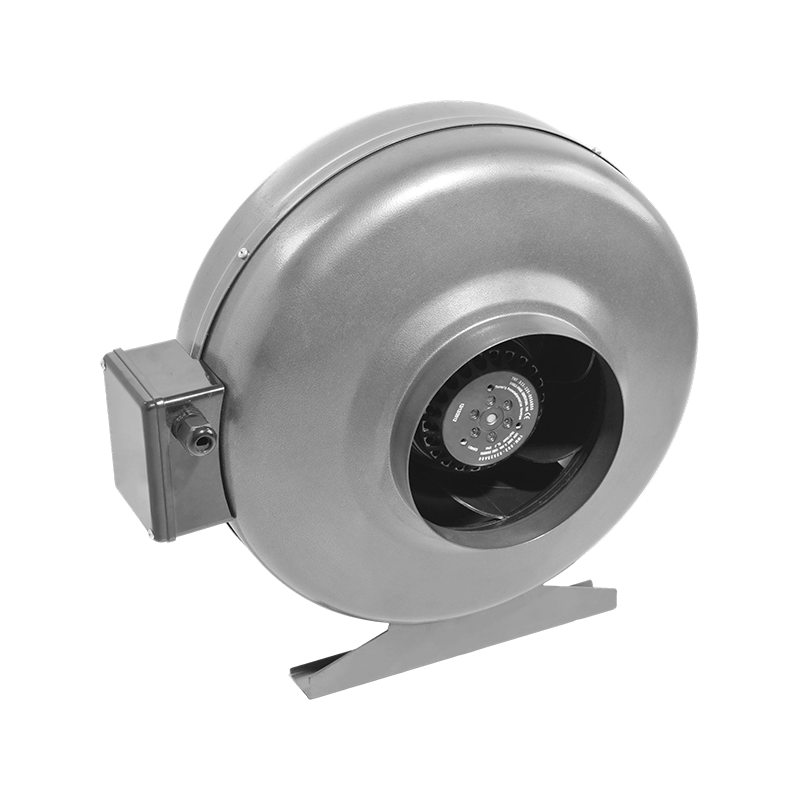
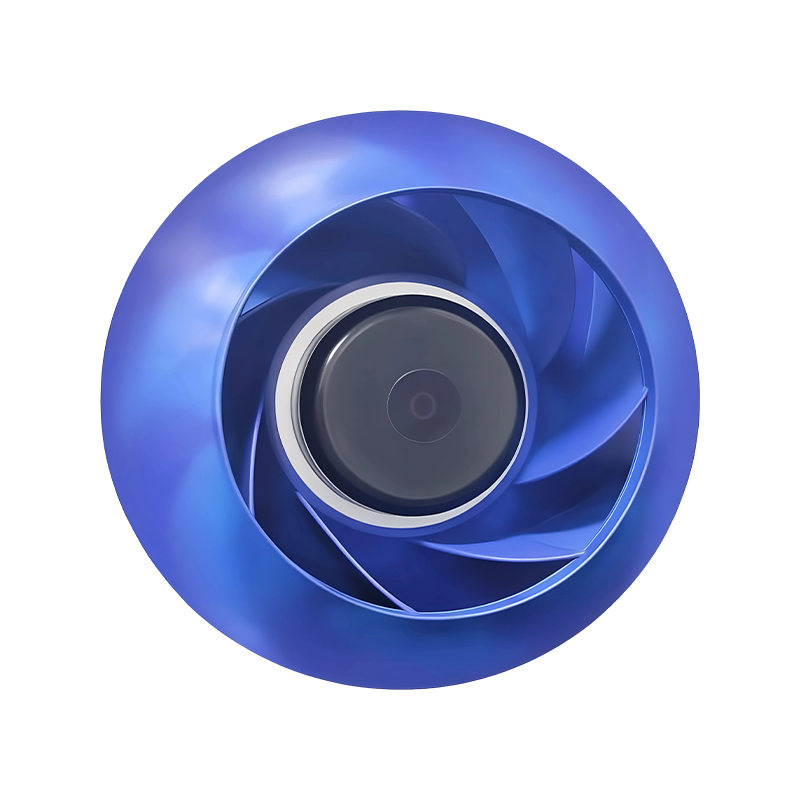 EC Centrifugal Blower with Stepless Speed Control and FeedbackThis intelligent blower delivers precise airflow via PID control and PWM input, ideal for high-static-pressure ducts. It complements the previous discussion on controlled motor operation.View Product →
For systems with high static pressure or long duct runs, a backward-curved centrifugal fan with integrated speed control is a strong option. It keeps the motor inside its safe temperature range while still delivering the required airflow at low speed.
Maintenance and Early Warning Signs
No fan is maintenance-free in an extreme environment. But predictive maintenance protects both the fan and your operations. Make it a habit to check the following:
- Check vibration levels on a regular schedule; bearings usually show the first increase.
- Inspect belts, fasteners and anti-vibration mounts for wear or looseness.
- Clean the impeller. A few hundred grams of dust on a blade can cause imbalance that destroys a bearing.
- Monitor motor current and winding temperature; sudden changes are a red flag.
- Relubricate bearings at the recommended intervals, with the correct grease for the ambient temperature.
- Verify that guards and filters are clean and that airflow is not restricted.
Pay attention to small changes. A one-millimetre increase in vibration on the motor side usually means a bearing is starting to fail. A 10% rise in motor current can mean dirt buildup or a mechanical issue. Acting early turns what could be a catastrophic failure into a planned service stop.
Experience Matters When the Environment Is Harsh
We have spent years designing energy-saving fans for machinery, HVAC, power electronics and cold-chain equipment. Our in-house wind tunnel, noise, motor performance and ageing laboratories let us test designs under conditions close to actual service. We have also learned the hard way that a fan that looks fine on paper can be the wrong fan on site. That is why we ask about ambient temperature, dust loading, corrosive chemicals and operating hours before we recommend a specific model.
For more on how these designs are used in difficult environments, see our application notes for power electronics and refrigerated and cold-chain systems.
The real cost of a fan failure is not the fan itself. It is the production stoppage, the safety risk and the emergency freight charges. If you invest time in the right design, materials and control strategy, heavy industrial fans can deliver reliable service for decades—even in extreme environments. A few questions answered at the specification stage will save you a lot of pain later.
NEXT:Centrifugal Fan Sizing Guide: Steps to Match Airflow, Pressure & Efficiency
Interested in cooperation or have questions?
-

sale3@beron-motor.com
-
 +86-15906637529
-
 Building 1 (12#), No. 619, Wangmei Road, Linping Street, Yuhang District, Hangzhou, China
 Wholesale Industrial Fan Manufacturers