
 English
  русский
  Español
  عربى
عربى 

Product Category
News Categories
Contact Us
Best Custom Fan Design Service for Industrial Heat-Treating Furnace Operations
Content
- 1 The Role of Custom Fans in Heat-Treating Environments
- 2 Fan Types and Their Heat-Treating Applications
- 3 Custom Engineering That Improves Reliability
- 4 Materials and Protection for Demanding Conditions
- 5 Why Choose Beron Motor for Custom Fan Design Service
- 6 Our Custom Fan Design Process
- 7 Ready to Start Your Custom Fan Design?
Every heat-treating line depends on more than the burners and alloy fans inside the furnace chamber. The support systems around that chamber — VFD cabinets, control panels, cooling tunnels, ductwork, and work-cell ventilation — rely on carefully selected fans to keep temperatures within safe ranges and maintain process stability. That is why plant managers and maintenance teams look for a custom fan design service that understands real operating conditions.
Hangzhou Beron Motor Co., Ltd. specializes in the engineering, production, and testing of energy-saving fans and micro-motor fans. We partner with heat-treating equipment manufacturers and end users to develop fan solutions that reduce overheating, lower energy consumption, and extend service life. In this guide, we explain the key factors in selecting a custom fan design service for heat-treating operations and what makes Beron Motor a strong partner.
The Role of Custom Fans in Heat-Treating Environments
Heat-treating processes such as carburizing, hardening, tempering, nitriding, and annealing generate high ambient temperatures, oil mist, dust, and fluctuating electrical loads. In this environment, fans must do far more than move air. They protect electronic components, maintain ventilation rates for worker safety, cool motors and drives, and support process consistency in adjacent zones.
Custom fan design matters because off-the-shelf fans are often a compromise. A fan sized for normal operation may stall under the higher static pressure of longer ductwork or dirty filters. A standard AC fan may keep running when the load changes, wasting energy. With a custom design, the impeller, motor, housing, and control scheme are matched to your specific heat-treating cell.
- Electrical cabinet and VFD cooling
- Transformer and power-electronics ventilation
- Air circulation around quench tanks and tempering furnaces
- Exhaust systems for oil mist and process gases
- Make-up air and general work-cell ventilation
Our engineers evaluate static pressure, airflow, ambient temperature, available mounting space, and power supply before recommending a fan configuration. That approach reduces field failures and energy waste.
Fan Types and Their Heat-Treating Applications
Selecting the right fan type is the first step in a reliable custom design. Axial fans deliver high airflow at low static pressure and are ideal for cabinet ventilation and general area cooling. Centrifugal fans generate higher static pressure, making them suitable for ducted systems, filtration units, and longer air paths. Mixed-flow duct fans offer a compact middle ground for inline boosting.
To help you compare, we have summarized typical uses in heat-treating support systems:
| Fan Type | Common Heat-Treating Use | Advantages | Watch Out For |
|---|---|---|---|
| Axial | Cabinet cooling, work-cell ventilation | High airflow, compact | Low static pressure capacity |
| Centrifugal | Ducted exhaust, high-pressure filters | High static pressure, stable performance | Larger footprint |
| Mixed-flow duct | Inline duct boosting, ventilation branches | Easy installation, moderate noise | Limited maximum pressure |
The choice between axial and centrifugal designs depends on your system resistance and space constraints. We explain the trade-offs in our guide on axial or centrifugal fan selection. For duct runs that must overcome long lengths or dirty filters, a high-static-pressure duct fan is often the right solution.
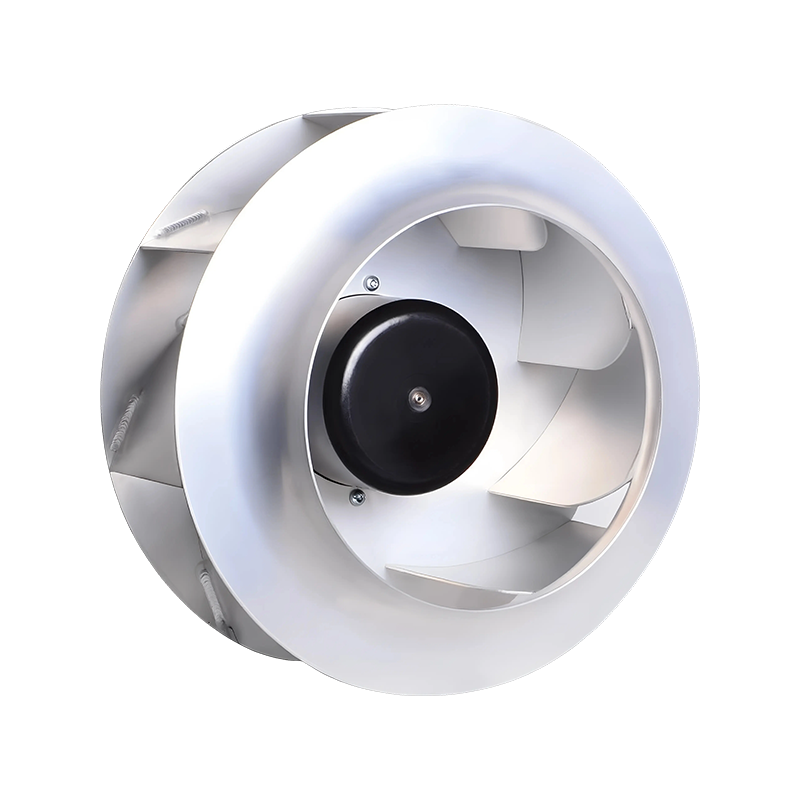
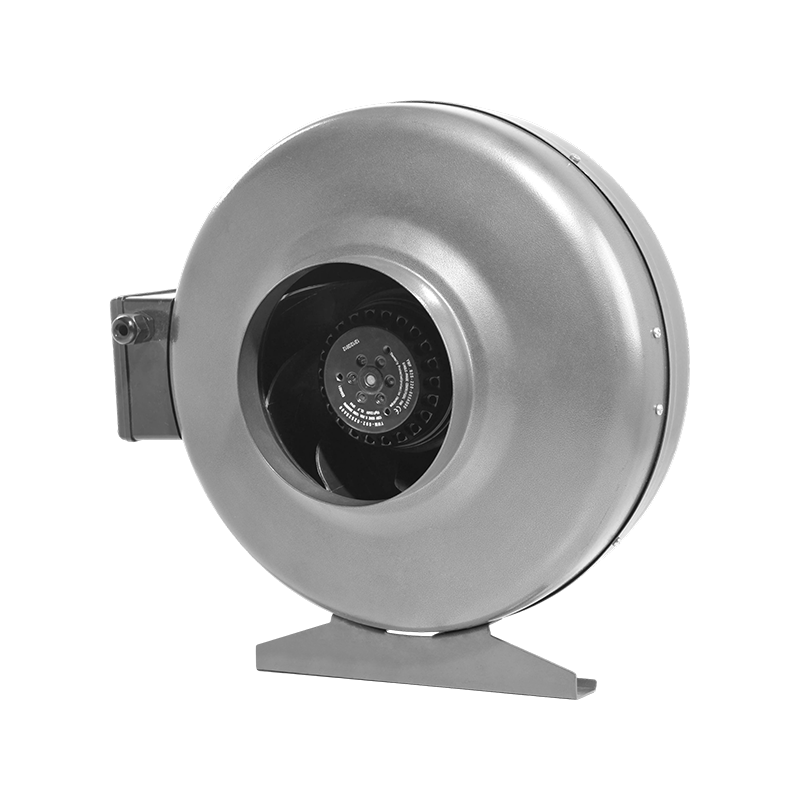 High-Static-Pressure Backward-Curved Centrifugal Duct Fan with IP44 RatingThis duct fan is designed for long duct runs and high static pressure, as highlighted in the guide for selecting fans when overcoming resistance. Its backward-curved impeller helps match fan curves to system curves, supporting energy-efficient exhaust in commercial kitchens, warehouses, and factories.View Product →
In one heat-treating retrofit, a customer replaced an oversized belt-drive blower with a custom backward-curved centrifugal duct fan. The new unit cut energy use by 28 percent while maintaining the required static pressure for a 20-meter exhaust duct. That type of result comes from matching the fan curve to the real system curve.
Custom Engineering That Improves Reliability
Reliability in heat-treating service starts with engineering. A truly custom fan design service should use validated data, not just catalog selections. At Beron Motor, we maintain wind tunnel, noise, and motor performance laboratories in Hangzhou and Huzhou, as well as an aging lab for long-term testing. These facilities allow us to measure airflow, sound pressure, and motor temperature rise before the fan reaches your equipment.
We also invest in 3D CAD design and thermomechanical simulation. This helps predict how the impeller and housing will behave under thermal expansion, vibration, and continuous duty. By balancing the rotating assembly and selecting appropriate materials, we reduce bearing stress and extend service life.
Another important element is speed control. Heat-treating cells often have varying heat loads. An EC (electronically commutated) fan with 0-10 V or PWM control can throttle airflow as temperature changes, saving energy and maintaining quieter operation.
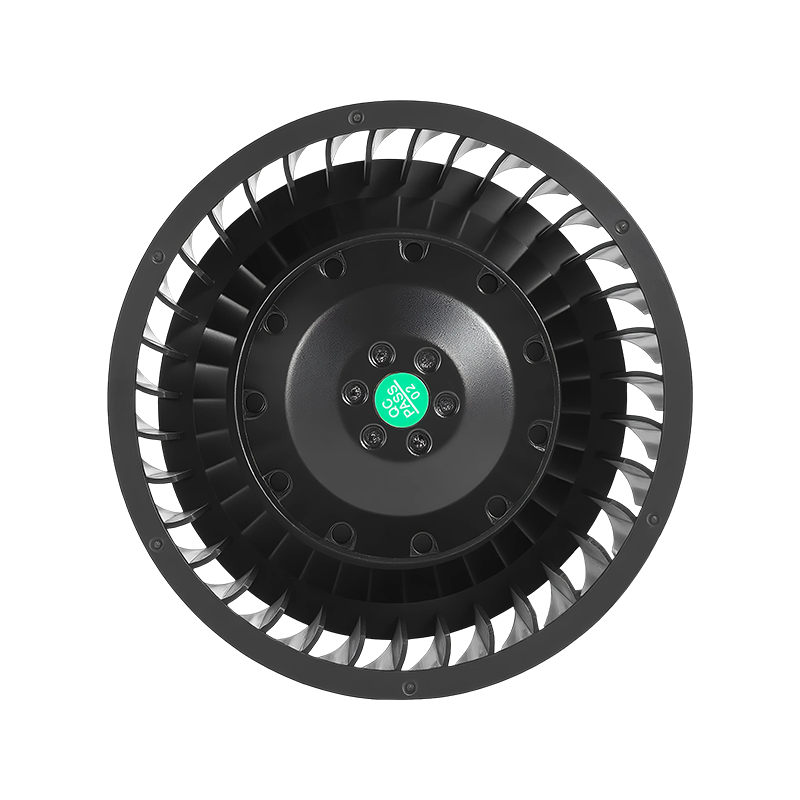
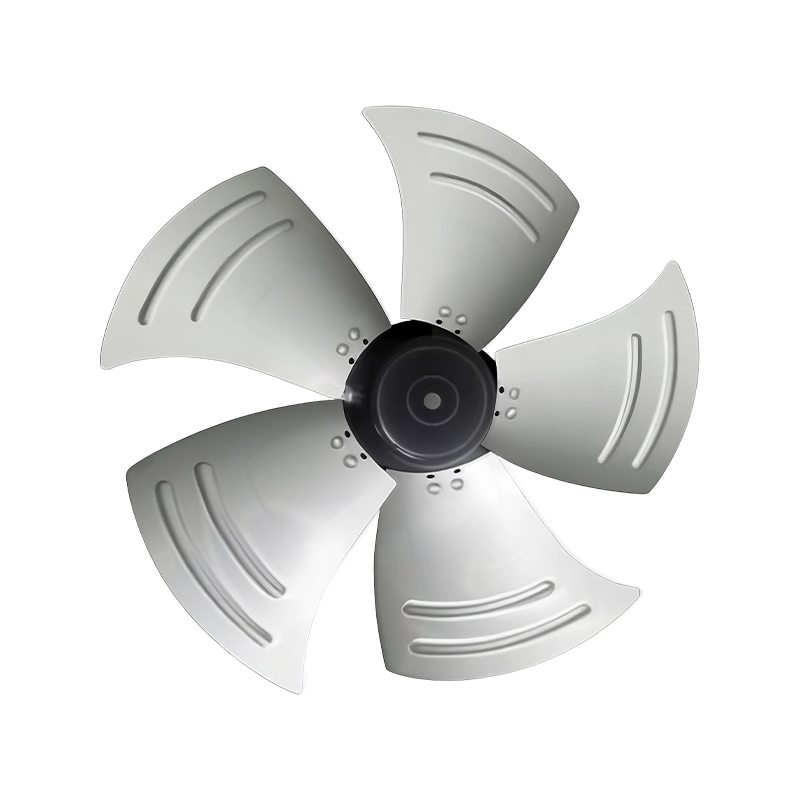 External Rotor EC Cooling Fan with 0-10V Stepless Speed ControlThis EC fan offers built-in closed-loop PID regulation with 0-10V or PWM control, making it ideal for applications with variable heat loads. Its higher efficiency compared to AC fans supports energy savings and quieter operation, as emphasized in the context of heat-treating cells.View Product →
For customers replacing older AC systems, EC fans offer an easy upgrade path. They retain the same mounting dimensions while delivering higher efficiency and smoother speed ramps. This is especially useful in VFD cabinets where heat dissipation varies with throughput.
Materials and Protection for Demanding Conditions
Heat-treating environments expose fans to elevated temperatures, humidity, oil vapor, and minor chemical exposure. Therefore, material selection and ingress protection are critical. We typically use galvanized steel for housings, aluminum or steel impellers depending on operating temperature, and motors with sealed bearings for longer life. For outdoor or washdown areas, IP44-rated fans provide protection against splashing water and solid particles.
Electrical protection is also built into the design. Fans can be supplied with thermal overload protection to prevent motor burnout. DC fans can include overvoltage and reverse-polarity protection for harsh electrical environments. When connecting to PLC or VFD systems, filtering and speed-control interfaces are available.
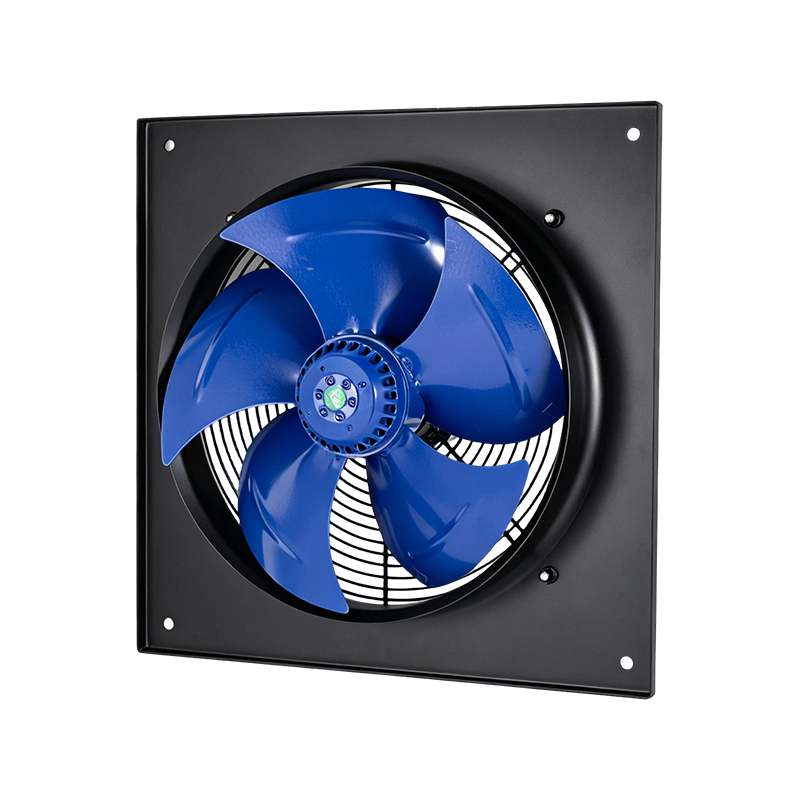
Panel-mount fans are one of the most common requests for electrical cabinets near furnaces. A compact, high-airflow fan can remove heat from PLCs, relays, and instrumentation. We offer a square panel-mount axial fan that fits standard cutouts and delivers reliable service in industrial settings.
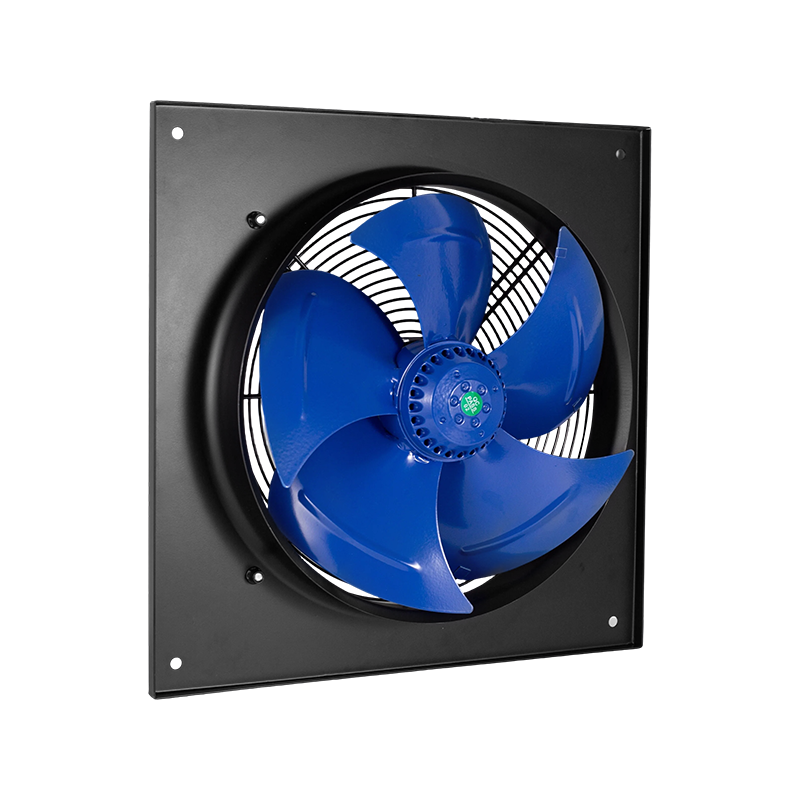 Square Panel-Mount AC Axial Fan with 5-Blade Design for Cabinet CoolingThis square panel-mount axial fan fits standard cabinet cutouts, providing straightforward installation for electrical enclosures. It delivers reliable airflow for heat dissipation from PLCs, relays, and instrumentation, matching the discussion of panel-mount fans used near furnaces in industrial settings.View Product →
If your application involves power electronics cooling, we can customize the fan to match your voltage, airflow, and mounting requirements.
Why Choose Beron Motor for Custom Fan Design Service
Customers in the heat-treating industry need a partner that can respond quickly and engineer for real conditions. Beron Motor combines in-house motor design with fan manufacturing, so the drivetrain and impeller are developed together rather than bolted together from separate suppliers.
- R&D centers in Hangzhou and Huzhou with wind tunnel, noise, and motor laboratories
- Dozens of patents in fan structure, fluid dynamics, motors, and control circuits
- ISO 9001:2015 quality management system, CE and CCC certifications, ROHS and UL testing
- Complete fan families in AC, EC, and DC technologies
- Customizable speed control options including 0-10 V, PWM, and stepless regulation
We serve equipment manufacturers and plant owners across the world. Because we control the majority of production, we can adapt quickly to design changes, prototype testing, and small-series production. This flexibility is valuable when you need a custom fan for a new heat-treating line or when you are upgrading an existing one to be more energy efficient.
Our Custom Fan Design Process
Every project follows a structured path that minimizes risk and ensures the final fan meets your thermal and acoustic targets.
- Requirements analysis: We collect airflow, static pressure, temperature, duty cycle, and mounting details.
- Performance calculation: We select the aerodynamic layout (axial, centrifugal, or mixed-flow) and motor size.
- CAD modeling and simulation: The fan geometry is modeled and checked for mechanical and thermal behavior.
- Prototype and lab testing: Samples are tested in our wind tunnel and noise laboratories to verify performance.
- Validation and production: After approval, we refine the design for manufacturability and begin series production.
This process helps us deliver fans that are neither undersized nor excessive, providing efficient, reliable service for the lifetime of your equipment.
Ready to Start Your Custom Fan Design?
The best custom fan design service for heat-treating operations is one that listens to your environment and backs its recommendations with testing. At Hangzhou Beron Motor, we have the engineering depth, product range, and real-world experience to support your next project. Contact our team to discuss your cooling, ventilation, or air-circulation challenge — we will help you find the right fan for the job.
NEXT:Common Centrifugal Fan Maintenance Issues: How to Diagnose and Fix Them
Interested in cooperation or have questions?
-

sale3@beron-motor.com
-
 +86-15906637529
 -
 Building 1 (12#), No. 619, Wangmei Road, Linping Street, Yuhang District, Hangzhou, China
 Wholesale Industrial Fan Manufacturers