
 English
  русский
  Español
  عربى
عربى 

Product Category
News Categories
Contact Us
Types of Centrifugal Blowers: Forward-Curved, Backward-Curved & Radial
Content
If you have ever tried to specify a centrifugal blower for an HVAC unit, a cooling system, or an industrial process, you know that not all blowers are the same. Even though they share the same basic working principle, the shape and orientation of the impeller blades change the performance, efficiency, and noise level in meaningful ways. In this guide, we walk through the main types of centrifugal blowers and help you match each one to the application you are working on.
What Is a Centrifugal Blower?
A centrifugal blower, sometimes called a centrifugal fan, uses a rotating impeller to accelerate air radially outward. Air enters near the center of the wheel, is picked up by the blades, and is discharged at the periphery into a scroll or volute housing. The volute converts much of the velocity energy into static pressure, which is why centrifugal blowers can operate against higher system resistance than axial fans. The blade geometry is the biggest variable, and that is exactly where the different types of centrifugal blowers split from each other.
Main Types of Centrifugal Blowers
Most fan engineers divide centrifugal blowers into four or five families based on impeller blade shape: forward-curved, backward-curved, radial, airfoil, and sometimes radial-tip. Each shape has its own pressure-flow curve, efficiency level, noise character, and tolerance to dirty or particulate-laden air.
Forward-Curved Centrifugal Blowers
Forward-curved blades curve in the direction of rotation, so the space between the blades is small and the wheel can move a large volume of air at relatively low speed. These blowers produce high airflow with moderate pressure and are among the quietest centrifugal options at low speeds. They are common in small to medium HVAC units, fan coils, and household appliances. The trade-off is that the pressure curve tends to be unstable, and aeroacoustic noise can rise sharply if the blower is operated away from its design point. For compact equipment where space matters and static pressure requirements are modest, a forward-curved blower is often the natural choice.
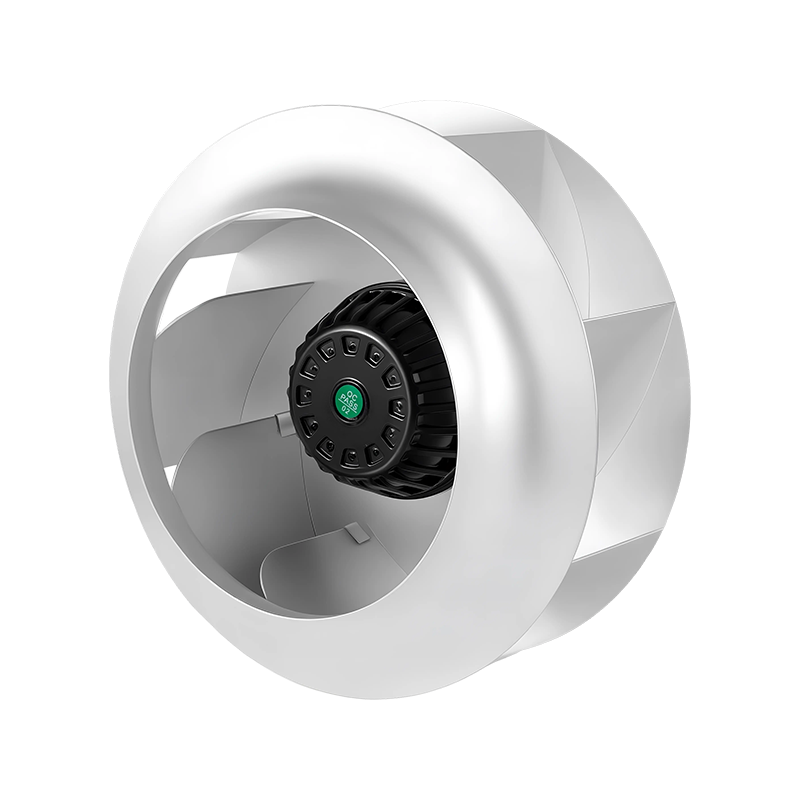
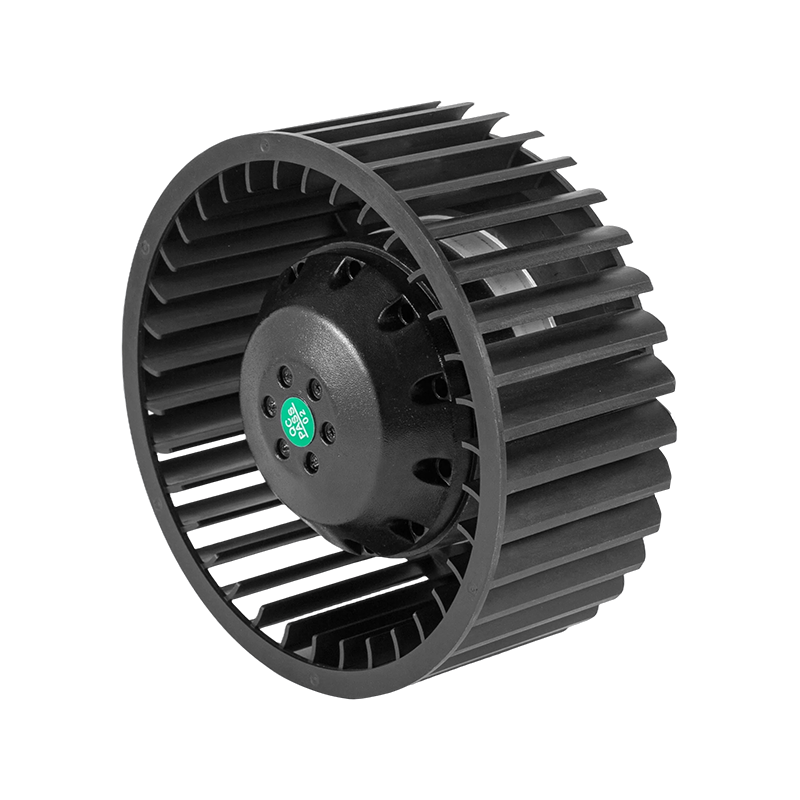 Industrial AC Forward Curved Centrifugal Blower for HVAC and Roof VentilationThis forward-curved blower delivers high airflow with moderate pressure, making it a practical choice for compact HVAC units, fan coils, and roof fans where space and quiet operation matter.View Product →
Backward-Curved Centrifugal Blowers
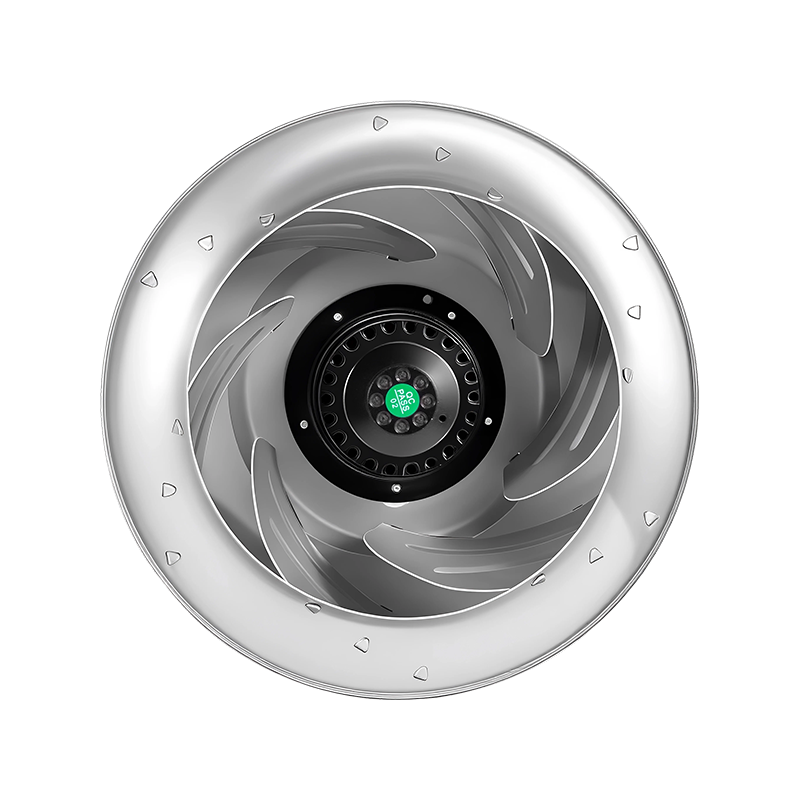
Backward-curved blades lean away from the direction of rotation. This shape builds pressure more efficiently, with typical static efficiencies noticeably higher than forward-curved designs. The blade also has a self-cleaning action: the air path widens as it moves outward, which reduces material build-up on the blade surface. Backward-curved blowers handle medium to large air volumes and higher pressure in industrial ventilation, dust extraction, and precision ventilating units. Their power consumption does not peak dangerously when system resistance drops, so they are easier to control and safer over a wider operating range. We use backward-curved impellers across many of our AC and EC centrifugal blowers, especially where long operating hours make efficiency a priority.
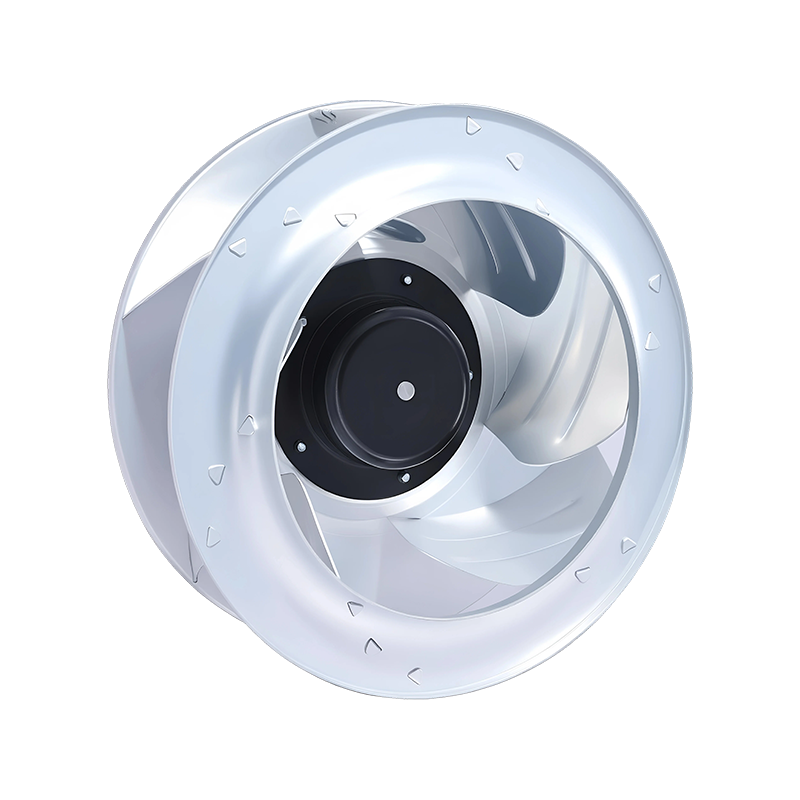
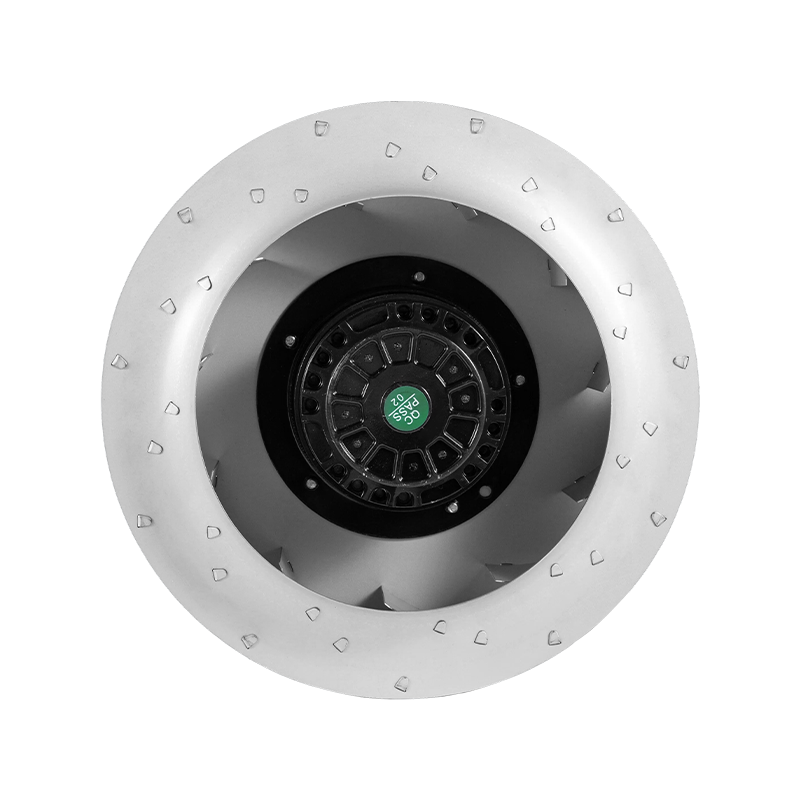 Durable Metal AC Backward Curved Fan for Filtering and FFU SystemsDesigned for large-scale filtering and FFU applications, this backward-curved fan offers higher efficiency and self-cleaning blades, suited for continuous industrial air exchange in demanding environments.View Product →
Radial (Paddle Wheel) Centrifugal Blowers
Radial blades point straight outward from the hub, like spokes on a wheel. This simple, rugged construction makes radial blowers ideal for handling air with dust, fibers, or even small solid particles, because the blades do not create pockets where material can collect. Radial blowers generate high static pressure and are very durable, but they are less efficient and noisier than forward- or backward-curved designs. You will often see them in pneumatic conveying, grain handling, and general industrial exhaust where reliability matters more than energy cost.
Airfoil Centrifugal Blowers
Airfoil blowers use blades shaped like an airplane wing. The aerodynamic profile reduces turbulence and gives the highest efficiency of any centrifugal blower type, along with lower noise at the same duty point. Because airfoil blades are hollow or fabricated, they are also relatively light. The main disadvantages are higher manufacturing cost and sensitivity to dirty or abrasive air: the thin profile can wear quickly if particles hit it. Choose an airfoil blower when the air is clean and you want maximum energy savings over a long service life.
Radial-Tip Centrifugal Blowers
Radial-tip blades curve forward at the outer edge but start from a radial inner section. This hybrid shape provides moderate efficiency and is less prone to material build-up than a pure forward-curved wheel. Radial-tip blowers are sometimes used in materials-handling and boiler-draft systems where both wear resistance and reasonable performance are required.
| Blade Type | Static Pressure | Airflow | Efficiency | Best Suited For |
|---|---|---|---|---|
| Forward-curved | Low to medium | High | Moderate | HVAC, appliances, compact units |
| Backward-curved | Medium to high | Medium to high | High | Industrial ventilation, FFU, clean air systems |
| Radial | High | Low to medium | Low | Dusty air, pneumatic conveying |
| Airfoil | High | Medium to high | Highest | Clean air, high-efficiency systems |
| Radial-tip | Medium | Medium | Moderate | Material handling, boiler draft |
How to Choose the Right Centrifugal Blower
Start with the system resistance, not the fan name. A forward-curved blower may move plenty of air at an open outlet, but if the ductwork, filters, or coils add static pressure, its airflow can collapse quickly. Backward-curved and airfoil designs hold their airflow much better as pressure rises. Then consider:
- Static pressure: Higher system resistance needs a blade shape that develops pressure efficiently.
- Air quality: Dust, fibers, moisture, or corrosive gases favor radial or backward-curved designs.
- Noise limits: Forward-curved blowers are quiet at low cost; airfoil blowers are quiet at high efficiency; radial blowers are noisier.
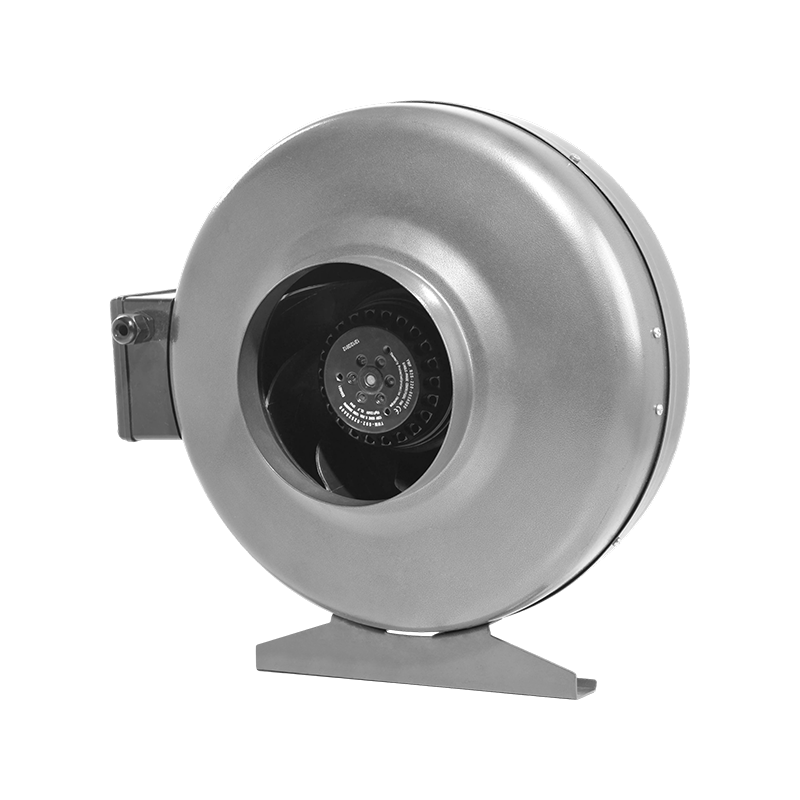
- Space constraints: Compact forward-curved models fit into tight enclosures, while inline centrifugal blowers simplify duct mounting.
- Energy costs: For continuous operation, higher efficiency pays back quickly even if the first cost is higher.
A good checkout: draw your duty point on the performance curve and verify that the blower has enough margin for dirty filters and inlet blockage. Oversizing by 10 to 20 percent is common practice, but avoid selecting a blower at the far end of its curve where noise and vibration are hardest to control.
Why Drive Technology Matters: AC, EC, and DC
The impeller is only half the story. The motor and its speed control affect the actual energy consumption, controllability, and maintenance burden. Traditional AC centrifugal blowers are robust and economical, and with an external rotor motor they fit inside compact housings. EC (electronically commutated) blowers replace AC power input with an integrated variable-speed drive, so you can modulate airflow smoothly using a 0-10 V signal or PWM. They are a popular upgrade for existing AC systems because they cut part-load energy use and improve comfort through stepless speed control. DC brushless blowers offer similar benefits in low-voltage systems, which is valuable in mobile equipment, IT communication, and energy storage applications.
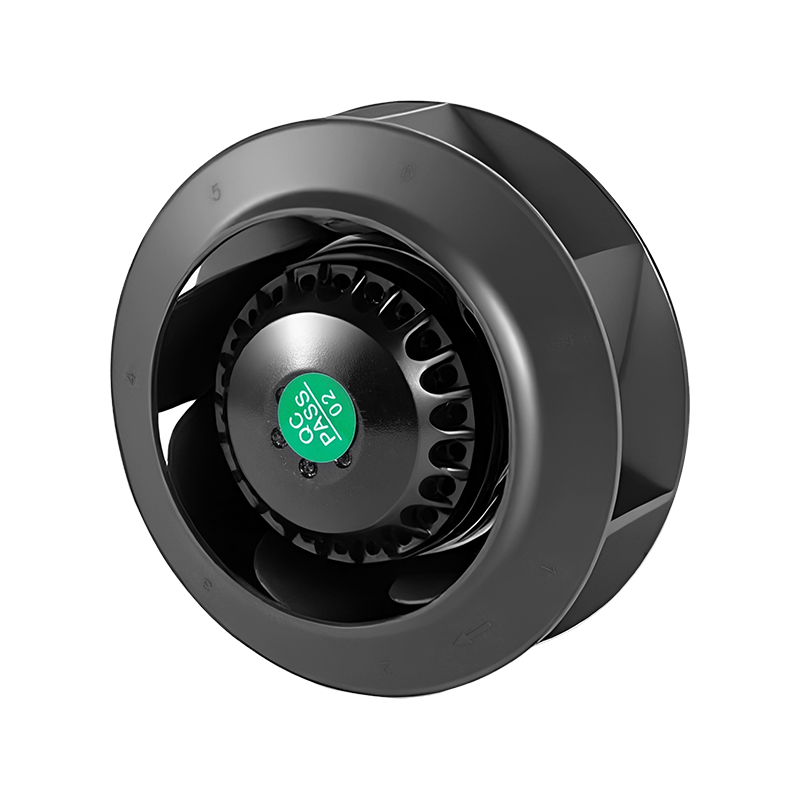
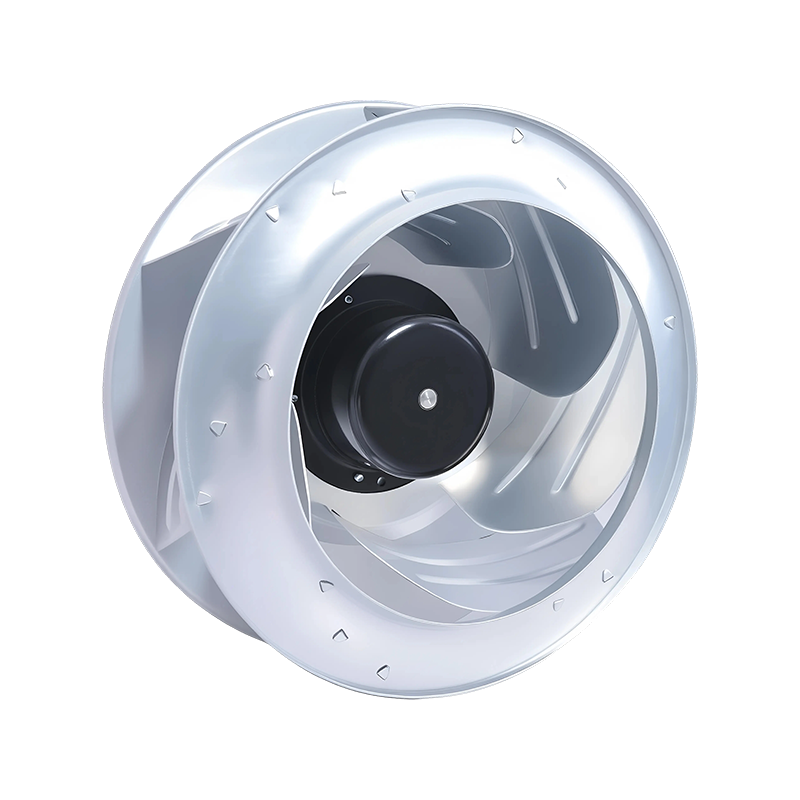 Professional EC Centrifugal Fan with High Static Pressure for FFU and PurificationAn EC centrifugal fan with backward-curved impeller and volute, it delivers 400–2500 Pa static pressure for penetrating HEPA filters, replacing AC fan plus converter while reducing energy use.View Product →
Common Applications Across Industries
Because the blade types and drive options cover such a wide range of pressure and flow, centrifugal blowers appear in almost every air-moving task that needs more than basic axial flow. In HVAC systems, they supply fan coils, air handling units, and variable-air-volume boxes. In refrigeration and cold chain, they drive evaporator and condenser airflow in display cases, cold rooms, and transport refrigeration. In power electronics and IT communication, they cool inverters, rectifiers, servers, and telecom cabinets where static pressure is required to push air through dense stacks. Household appliances such as range hoods, dryers, and heating appliances also rely on compact forward-curved blowers. Our product development team designs blowers specifically for air conditioning and ventilation applications as well as refrigerated and cold chain applications, so the motors, electrical ratings, and protective features are matched to the environment they operate in.
Choosing the right centrifugal blower is about understanding the blade shape, the operating point, and the environment. If you need high airflow in a small package, a forward-curved blower is a proven answer. If efficiency and stable pressure are more important, look to backward-curved or airfoil designs. And if the air is dirty or the duty is hard, a radial blower will not let you down. The best way to turn a catalog specification into a reliable machine is to review the performance curve with your actual system conditions.
We have built AC, EC, and DC centrifugal blowers for HVAC, refrigeration, electronics cooling, and industrial ventilation for many years. If you are evaluating a new design or replacing an existing blower, share your pressure, airflow, and space constraints with our engineers and we will help you match the right type to the job.
NEXT:Best Custom Fan Design Service for Industrial Heat-Treating Furnace Operations
Interested in cooperation or have questions?
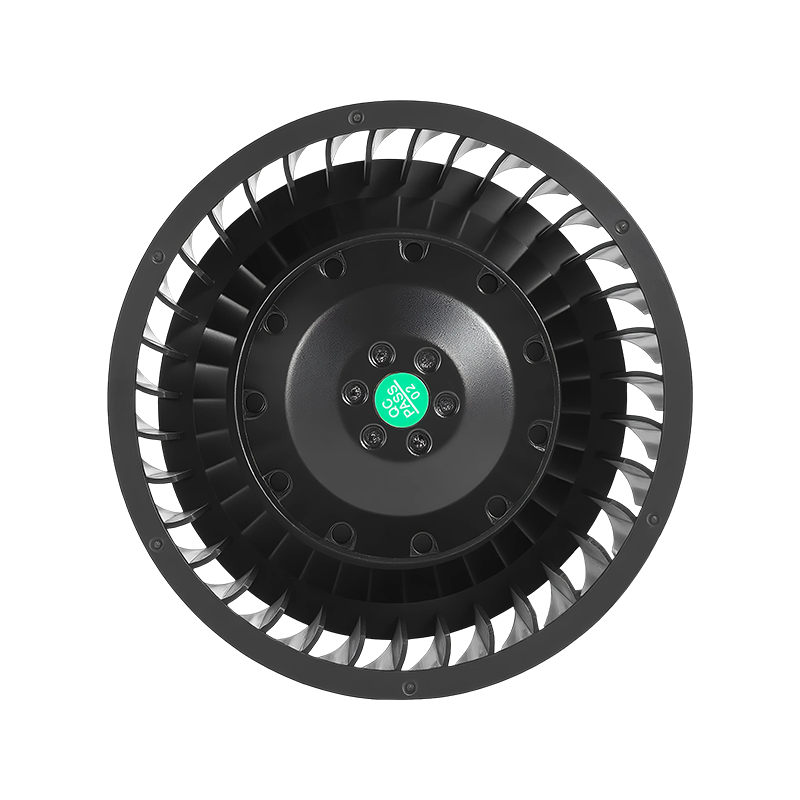
-

sale3@beron-motor.com
-
 +86-15906637529
 -
 Building 1 (12#), No. 619, Wangmei Road, Linping Street, Yuhang District, Hangzhou, China
 Wholesale Industrial Fan Manufacturers