
 English
  русский
  Español
  عربى
عربى 

Product Category
News Categories
Contact Us
Common Centrifugal Fan Maintenance Issues: How to Diagnose and Fix Them
Content
- 1 Start with a Clear Understanding of the Fan's Operating Principle
- 2 Common Centrifugal Fan Maintenance Issues and Their Root Causes
- 3 Quick Reference Troubleshooting for Centrifugal Fan Maintenance Issues
- 4 Preventive Maintenance Best Practices for Longer Fan Life
- 5 When Repairs No Longer Make Sense
- 6 Final Thoughts on Centrifugal Fan Maintenance
Centrifugal fans play a critical role in ventilation, cooling, and industrial air movement systems. When a fan begins to underperform, the consequences can range from higher energy bills to unexpected production stoppages. Knowing the most common centrifugal fan maintenance issues, what causes them, and how to correct them will help you extend equipment life and avoid costly emergency repairs.
Start with a Clear Understanding of the Fan's Operating Principle
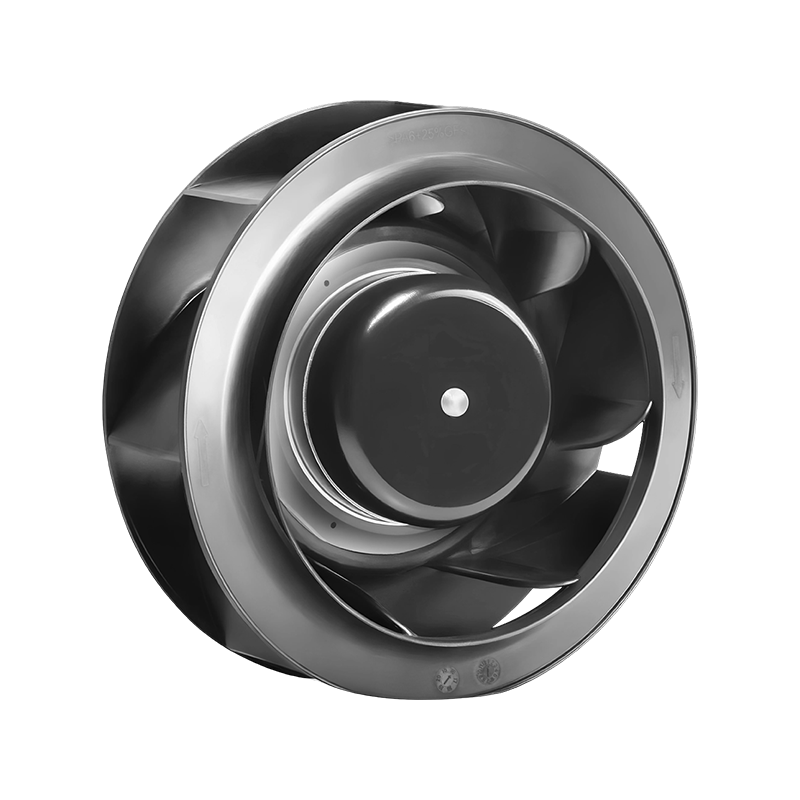
Before jumping into repairs, it helps to recall how a centrifugal fan generates airflow. Air enters the impeller at the center hub, and the rotating blades accelerate it outward to the scroll housing, where it is collected and delivered into the duct or process. Because everything depends on the impeller, motor, bearings, and housing working together, a failure in one component often shows up as a symptom elsewhere. A quick review of how a centrifugal fan works gives technicians a useful mental map for isolating faults faster.
Common Centrifugal Fan Maintenance Issues and Their Root Causes
Excessive Vibration and Rotor Imbalance
Vibration is one of the first signs that a centrifugal fan needs attention. The most common causes include uneven dust build-up on the impeller blades, a bent or eroded impeller, loose mounting bolts, worn bearings, and misalignment between the motor shaft and the fan rotor. Over time, even minor vibration can loosen electrical connections, damage ductwork, and accelerate bearing failure. If vibration develops suddenly, inspect the impeller for deposits and physical damage first, then check the mounting base and coupling alignment.
Unusual Noise from the Impeller or Housing
Noise complaints are often related to vibrating parts or airflow disturbances. A rattling sound usually points to loose panels or foreign objects inside the scroll housing. A scraping or metallic sound may indicate that the impeller is rubbing against the inlet cone or housing wall, often because of worn bearings or a shifted rotor. A loud hum can be a sign of electrical trouble in single-phase motors, such as a failing start capacitor. Because noise issues tend to worsen gradually, early investigation almost always saves money.
Bearing Wear and Premature Failure
Bearings are among the most frequent replacement items on centrifugal fans. Common causes of premature bearing failure include contaminated grease, over-lubrication, high ambient temperatures, excessive belt tension, and unbalanced rotating parts. Symptoms appear as squealing, grinding, excessive vibration, or localized heat at the bearing housing. A practical approach is to follow the manufacturer's lubrication schedule and replace bearings as a matched set rather than individually.
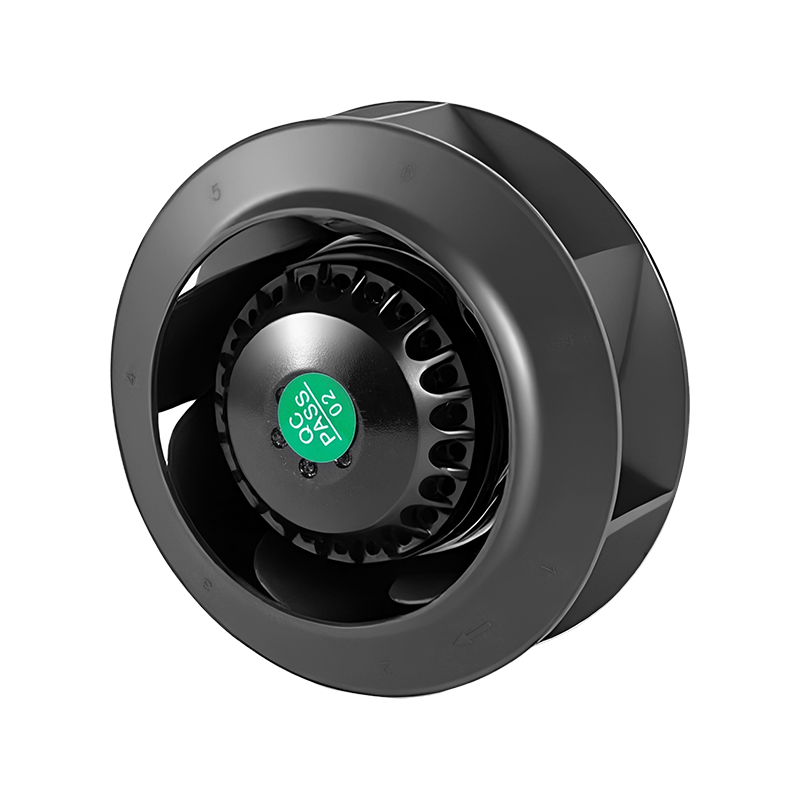
When selecting replacement fans, many maintenance teams now choose motors with higher-grade bearings and sealed construction to reduce this problem at the source.
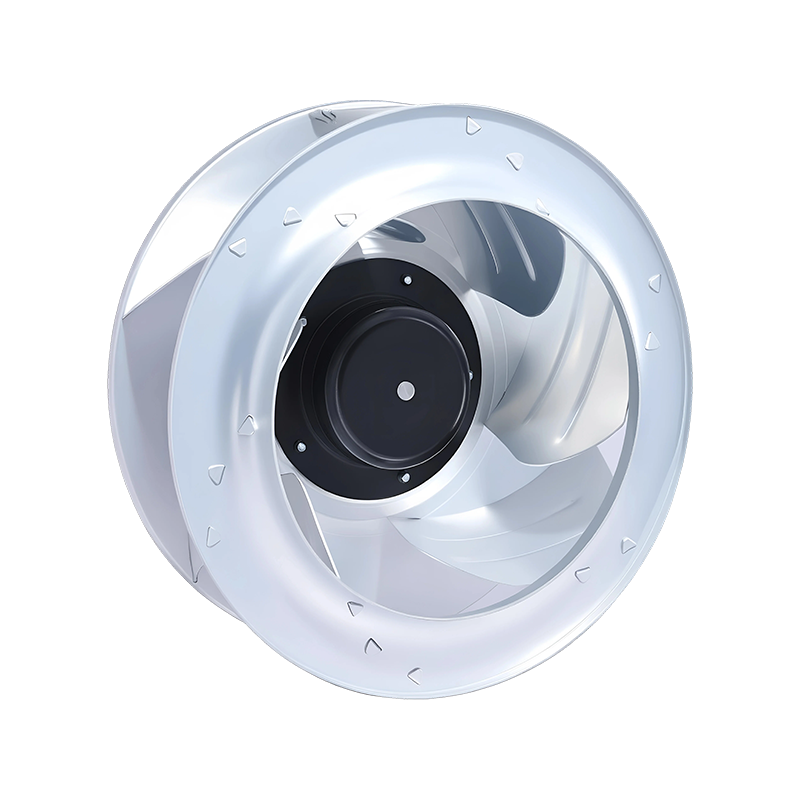 High-Efficiency EC Backward Curved Centrifugal Fan for HVAC ReplacementThis EC centrifugal fan is designed for sustainable HVAC systems, offering smart AC replacement with customizable electrical and structural options. Its durable bearings and sealed construction address common airflow loss issues, making it a practical choice for maintenance teams.View Product →
Reduced Airflow and Dropping System Performance
If the fan sounds normal but airflow drops, the problem is often outside the fan itself. Clogged filters, blocked inlets, closed dampers, and dirty impellers are the usual suspects. In belt-driven units, a slipping belt will also reduce speed and airflow. Occasionally, a three-phase motor may run in the wrong direction of rotation, a mistake that leads to very low output. Checking these simple causes before tearing down the fan can save significant time. Many of our customers face these scenarios in air conditioning and ventilation applications, where airflow loss directly affects comfort and process conditions.
Motor Overheating and Electrical Faults
A centrifugal fan motor can overheat because of excessive load, restricted airflow around the motor, low or unbalanced voltage, frequent starting cycles, or worn insulation. Electrical faults such as a failed run capacitor, shorted windings, or a tripped circuit breaker also produce intermittent operation or total failure. Thermal overload protection is useful, but it is not a replacement for checking current draw and supply voltage during periodic inspections.
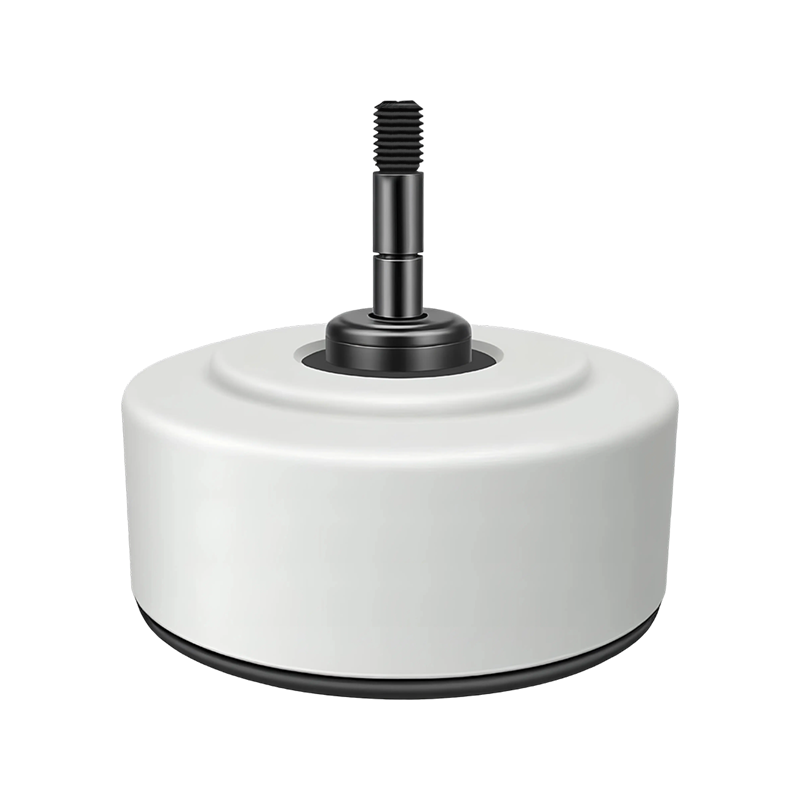
Modern brushless designs run significantly cooler and eliminate many of these electrical and mechanical wear points.
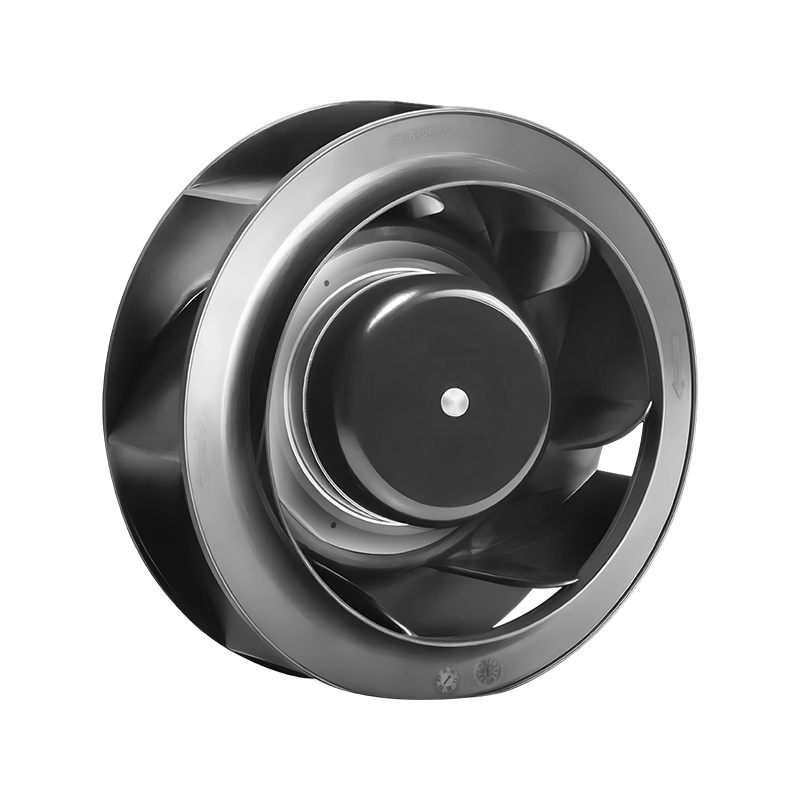 Energy-Saving DC Brushless Centrifugal Fan with BLDC MotorThis brushless DC centrifugal fan achieves high motor efficiency and quiet operation, suited for solar ventilation, RV HVAC, and telecom cabinets. Its efficient speed regulation and reduced wear make it a reliable upgrade over traditional AC fans.View Product →
Quick Reference Troubleshooting for Centrifugal Fan Maintenance Issues
The table below summarizes the most common symptoms and the first steps to take when a centrifugal fan misbehaves.
| Symptom | Likely Cause | Quick Check | Recommended Action |
|---|---|---|---|
| Excessive vibration | Impeller imbalance, worn bearings, loose mounting | Visual inspection and low-speed run test | Clean impeller, tighten bolts, replace bearings |
| Squealing or grinding noise | Bearing wear, foreign debris, rotor rubbing | Listen around bearing housings | Replace bearings, remove debris, realign rotor |
| Low airflow | Dirty filter, blocked inlet, wrong rotation direction | Check filters, dampers, and phase rotation | Clean or replace filter, open dampers, correct wiring |
| Motor trips on overload | Overcurrent, low voltage, mechanical jamming | Measure current and voltage, check rotation freedom | Restore stable supply, remove obstruction |
| Fan runs hot | Cooling restriction, overloading, bearing friction | Check airflow around motor and bearing temperature | Improve ventilation, reduce load, regrease bearings |
Preventive Maintenance Best Practices for Longer Fan Life
A structured maintenance program prevents most centrifugal fan maintenance issues from escalating. The following steps form a solid routine for fans operating in continuous or intermittent duty:
- Clean the impeller and inner surfaces of the scroll housing at least once per quarter, or more frequently in dusty environments.
- Inspect and torque all mounting bolts, motor hold-downs, and duct connections during every service visit.
- Lubricate bearings according to the manufacturer's instructions, avoiding both under- and over-lubrication.
- Monitor vibration, operating current, and bearing temperature trends so a gradual change is noticeable before failure occurs.
- Replace inlet filters on schedule and verify that dampers, grilles, and ducts remain free of obstructions.
- Check supply voltage balance on three-phase systems and inspect capacitors on single-phase motors.
- Keep spare impellers, bearings, and capacitors in stock for quick turnaround on critical fans.
When Repairs No Longer Make Sense
Even with excellent maintenance, every fan eventually reaches a point where repair costs climb and performance can no longer be recovered. Older motors with burned-out windings, heavily corroded impellers, and housings that have lost their structural rigidity are good candidates for replacement rather than repeated repair. Energy efficiency is another important factor. Older belt-driven and standard-efficiency units often consume substantially more electricity than modern electronically commutated designs.
For facilities looking to reduce energy consumption and lower maintenance frequency, upgrading to an EC centrifugal blower is a proven solution. EC motors offer stepless speed control, better part-load efficiency, and fewer wearing parts than traditional AC motor and belt arrangements.
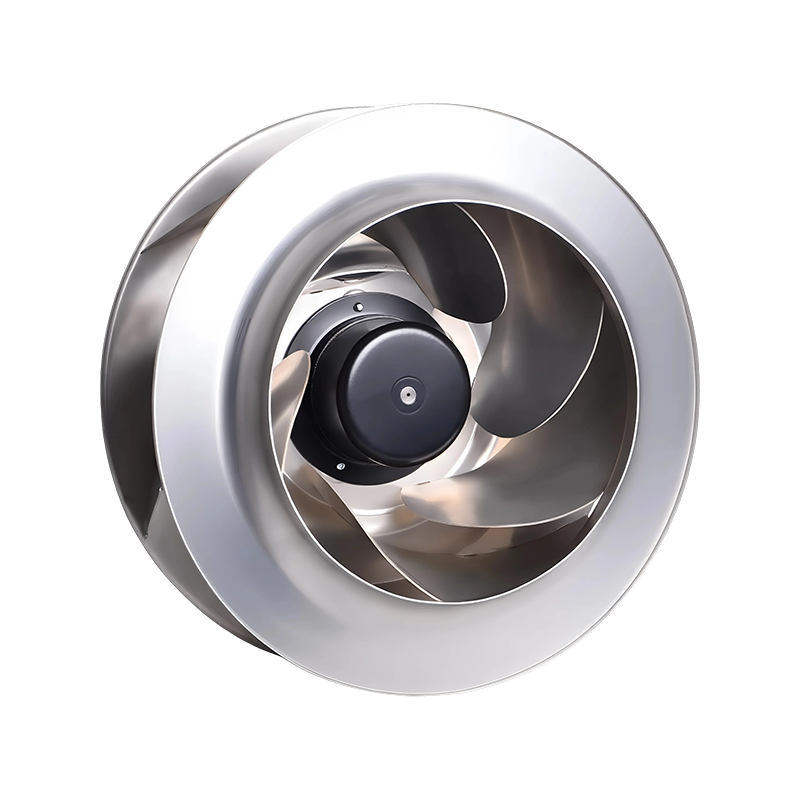 Eco-Friendly EC Centrifugal Blower for Energy-Efficient UpgradesThis EC centrifugal blower supports green compliance with EU directives and LEED/BREEAM ratings, offering stepless speed control and reduced energy use. It is an effective replacement for AC fans in data centers, AHUs, and similar facilities.View Product →
Final Thoughts on Centrifugal Fan Maintenance
Most centrifugal fan maintenance issues are easy to identify when you understand the relationship between airflow, impeller condition, bearings, and motor performance. A consistent inspection routine, combined with fast attention to unusual noise or vibration, will keep your fans running reliably for years. And when replacement becomes the smarter choice, modern EC and brushless DC fans offer an effective way to reduce both energy use and ongoing maintenance demands.
NEXT:Do Duct Booster Fans Really Work? What to Know Before Installing an Inline Duct Fan
Interested in cooperation or have questions?
-

sale3@beron-motor.com
-
 +86-15906637529
 -
 Building 1 (12#), No. 619, Wangmei Road, Linping Street, Yuhang District, Hangzhou, China
 Wholesale Industrial Fan Manufacturers